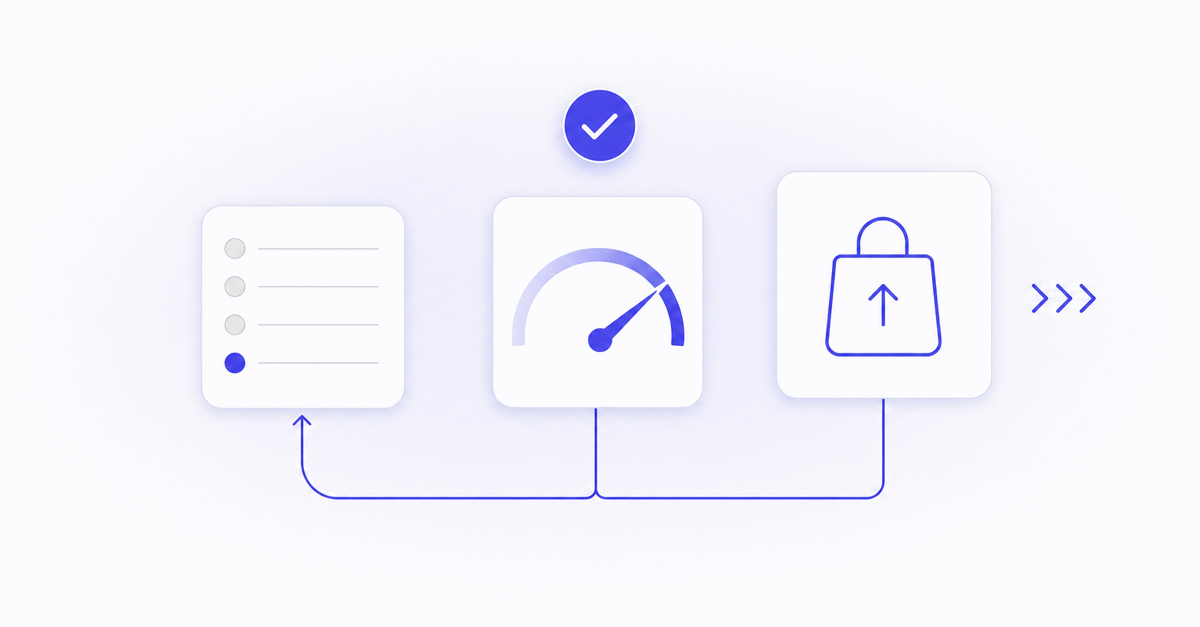
Your store showed up in ChatGPT. The dashboard turned green. The order never came. That gap is the real problem in ecommerce AEO, because a mention count and a share-of-voice percentage cannot tell a strong recommendation from a weak one. A tool is worth paying for when it reads the answer the way a buyer reads it.
- A mention is not a recommendation. Being named last, named as the pricey option, or named without a
link all count as a win in share-of-voice, and all lose the sale.
- Quality of mention needs its own score. Arenza scores ACS — Agentic Conversion Score — only over the
answers where the business actually appeared, and always shows it with its coverage.
- Absence is a visibility fact, not a conversion failure. When a brand is absent, Arenza reports AVS 0
and does not score ACS at all. A zero would claim the AI discussed you and failed to sell you.
Quick verdict
What Arenza gives you at each tier. List prices, USD per month.
| What you get | Free — $0 | Starter — $49 | Pro — $299 |
|---|---|---|---|
| AI assistants scanned (ChatGPT, Google AI Mode) | ✅ weekly | ✅ daily | ✅ daily |
| AVS and ACS, with coverage shown next to ACS | ✅ | ✅ | ✅ |
| All buyer intents, uncapped | ✅ | ✅ | ✅ |
| Verbatim AI answer text and brand accuracy diagnostics | ✅ | ✅ | ✅ |
| Markets measured | 1 | 1 | 3 |
| Tracked competitors and head-to-head comparison | — | ✅ unlimited | ✅ unlimited |
| Articles published to your CMS or Shopify blog | — | 5 / month | 100 / month |
| Articles hosted on your own domain, on-site fixes deployed | — | — | ✅ |
No credit card is required for Free. Starter and Pro can be cancelled at any time.
1. Share-of-voice counts a bad mention as a good one
Suppose an AI answer to "trail running shoes for wide feet" names your store. It might name you near the bottom of the list. It might name you as the expensive option. It might attach a sizing caveat pulled from an old review. It might name you with no link, while a competitor in the same sentence gets the click.
A mention counter scores all four of those as one mention. So does a share-of-voice percentage. The number goes up, and the buyer still chose someone else. This is the specific failure that makes AEO dashboards feel disconnected from the sales report.
Arenza splits the question in two. AVS — Agentic Visibility Score — answers whether you are found. ACS — Agentic Conversion Score — answers whether the answer, once you are found, actually sells you. The third headline metric, AI-attributed revenue, connects those answers to orders and is out of scope here.
2. A conversion score is only meaningful over the answers where you appeared
ACS is scored only over answers where the business actually appeared. That constraint is not a technicality. Averaging conversion quality across answers that never named you produces a number that moves for the wrong reason, and a merchant chasing it optimizes for the wrong thing.
That is also why an absent brand gets AVS 0 and no ACS at all. A zero would be a second, separate accusation: that the AI discussed your brand and failed to sell it. Absence is already fully described by AVS 0. Adding a conversion zero on top double-counts the same fact. It also tells the merchant to fix messaging when the actual problem is that they are invisible.
The two situations need opposite responses. Absent means earn the mention. Present-but-weak means improve the mention. A tool that collapses them into one falling line teaches the wrong fix.
3. A score without coverage is not a score
Take a hypothetical. Two stores both score ACS 95. One score is computed over 3% of tracked answers, the other over 90%. Those are not the same claim. The first rests on thin evidence, a narrow pocket where the answers happen to favour you. The second rests on broad evidence across most of what buyers ask. Reported as a bare "95", they look identical.
Arenza always shows ACS with its coverage. The roll-up is stated too: scored per answer where you appeared, averaged within each buyer intent, then across intents with equal weight. The denominator is part of the claim. When you review an AEO tool, ask what fraction of answers the headline number is computed over. Then ask whether that fraction is on screen next to it. If you have to go find it, the tool has already lost the argument.
Coverage also protects you from your own good news. Growing coverage often drags the average score down, because you start appearing in harder, more competitive answers. Without the denominator on screen, that healthy movement reads as a decline.
4. When the mention is weak, there are three things a merchant can actually change
Diagnosis only matters if it maps to an action. Three levers are available.
Read the verbatim answer. Arenza shows the actual AI answer text, included from the Free tier. Weakness is usually visible in one clause. "Good budget option" and "premium pick for serious runners" are different positions, and you cannot tell which one you hold from a percentage.
Check what the AI is claiming about your products. Accuracy is a diagnostic surface in Arenza. It flags outdated specs and false claims in AI answers, with a severity level and the verbatim quote where one was captured. For a store, that is often a discontinued variant, a superseded spec on a product page, or a SKU the model has filed under the wrong category. Those are correctable facts, not branding problems.
Publish the answer the engine is missing. Starter includes 5 articles per month, published to your own CMS or Shopify blog. Pro raises that to 100 articles per month and hosts them on your own domain at brand.com/blogs/... . The loop is measure, publish, then re-measure the same answers. Arenza calls the sequence ARC — Answer · Reach · Convert.
None of this guarantees a citation or a ranking. It is designed to change the specific sentence the engine is producing about you, which is the only part you control.
5. Engine count tells you less than what the tool says about each answer
Arenza measures ChatGPT and Google AI Mode. It measures the US, UK, DE and JP markets. No single tier gives you all four at once. Free and Starter each cover one market, and Pro covers three.
Published engine scopes vary across the category. Profound publishes Starter as ChatGPT tracking only, and Growth as three answer engines: ChatGPT and Google AI Overviews. Its Enterprise tier is custom, up to nine. Otterly.AI publishes core engines as ChatGPT, Google AI Overviews, Perplexity and MS Copilot, with Claude, Gemini and Google AI Mode as paid add-ons. Ahrefs Brand Radar publishes coverage of AI Overviews, Gemini, Perplexity, ChatGPT, Copilot and AI Mode, with Claude as an add-on.
The question to hold onto: for each engine on that list, does the tool tell you how the answer positions you, or only that you were in it?
Cost math for an ecommerce store
Start by reading one real AI answer about your own store before you budget anything.
Arenza Free is $0 per month with no credit card. It scans your brand across two AI assistants and covers all buyer intents. It runs weekly in one market. It shows verbatim AI answers, brand accuracy, and the brands the AI cites as evidence. AVS and ACS are both included, and ARC Autopilot is included from Free. Tracked competitors, articles and API are not.
Arenza Starter is $49 per month, cancel anytime. It adds daily scans on both AI assistants and unlimited tracked competitors with head-to-head comparison. It also adds 5 articles per month, API and MCP, plus Slack.
Arenza Pro is $299 per month. It scans both AI assistants daily across 3 markets, and covers 3 brands with unlimited competitors. It adds 100 articles per month, own-domain article hosting, on-site technical fixes deployed for you, off-site analysis, Arenza Agents. Performance is outcome-based and sales-led through hello@arenza.ai, with each success-fee structure agreed per customer.
Published list prices elsewhere, for reference. Profound lists Starter at $99/month billed yearly, with 50 prompts tracked, 1,500 responses monthly, 1 language and 1 region; Growth is $399/month billed yearly. Otterly.AI lists Lite at $29/month for 15 search prompts, Standard at $189/month for 100 prompts, Premium at $489/month for 400 prompts, and Enterprise custom from $1,000/month. Ahrefs Brand Radar lists Custom Prompts from $50/month, included in Ahrefs paid plans Lite and above. That figure sits on top of a paid Ahrefs base plan. Its AI Visibility Index is listed at $199/month. Verify all of these on each vendor's own pricing page.
Arenza meters tracked prompts too, and the number belongs next to everyone else's. Arenza tracks 10 prompts on Free, 30 on Starter and 120 on Pro. Buyer intents are uncapped on every tier, but tracked prompts are not, so compare prompt counts against prompt counts.
The choice comes down to this
If you have never read a real AI answer about your own store, start with the $0 tier and read five of them before you buy anything.
If your mention count is rising but revenue is flat, you need a conversion-quality score with coverage on screen, not a bigger engine list.
If AI answers are repeating a stale spec or the wrong category for your products, start with accuracy diagnostics and the verbatim quotes.
If you are ready to publish against the gaps and re-measure the same answers, $49/month Starter is the entry point. Pro at $299/month adds own-domain hosting and deployed on-site fixes.
If you manage brands for clients, the multi-brand portfolio view is an agency capability rather than a single-store one. Pro holds 3 client brands under one login; more than 3 is the sales-led Performance tier.
FAQ
What is the difference between AI visibility and AI conversion?
Visibility asks whether you are found; conversion asks whether the answer sells you once you are found. AVS, the Agentic Visibility Score, measures the first. ACS, the Agentic Conversion Score, measures the second, scored only over answers where the business actually appeared. A store can score well on one and poorly on the other.
If my brand is not mentioned at all, what should the conversion score be?
Nothing. It should not be scored. Absence means AVS is 0 and no conversion score is produced, because a zero would wrongly claim the AI discussed your brand and failed to sell it. Those two situations call for opposite fixes, so they should never share a number.
Why does a conversion score need to show coverage?
Because coverage is the denominator, and a score without it is not interpretable. The same score over 3% of answers rests on thin evidence, while the same score over 90% of answers rests on broad evidence. Arenza always shows ACS with its coverage.
Can I see the actual wording AI uses about my products?
Yes. Verbatim AI answers are included from the Free tier, alongside brand accuracy checks and the brands the AI cites as evidence. Reading the sentence is usually faster than reading the chart, because weak positioning tends to sit in a single clause.
What can I change when the mention is weak but present?
Three things. Correct any outdated spec or false claim the accuracy surface flags. Publish content that answers the buyer question the engine is currently answering with someone else. Then re-measure the same answers. Articles are included from the $49/month plan, with own-domain hosting on the $299/month plan.